Multicultural interaction, exciting gastronomy, young artists and galleries – Munich's Bahnhofsviertel is different from the rest of the city. Fortunately so. A tribute to a special neighbourhood feeling.
Munich's Hauptbahnhof (main train station) has three exits. The exit to the north is only used by those who have some business within walking distance in the neighbouring office district. The main exit towards the east is intended to be the most popular route, leading to the forecourt in front of the train station and from there into the picturesque centre of Munich – however, this exit has been blocked off for years because of major construction works. Anyone who doesn't feel like shopping in the pedestrianised area but instead wants to visit the lively southern parts of the city towards the Isar river (and that's many people), should take the southern exit. The little neighbourhood it delivers you into covers barely more than two streets, and yet it never fails to amaze people visiting Munich for the first time. “This is Munich?! Elegant, gleaming, bourgeois Munich?!”
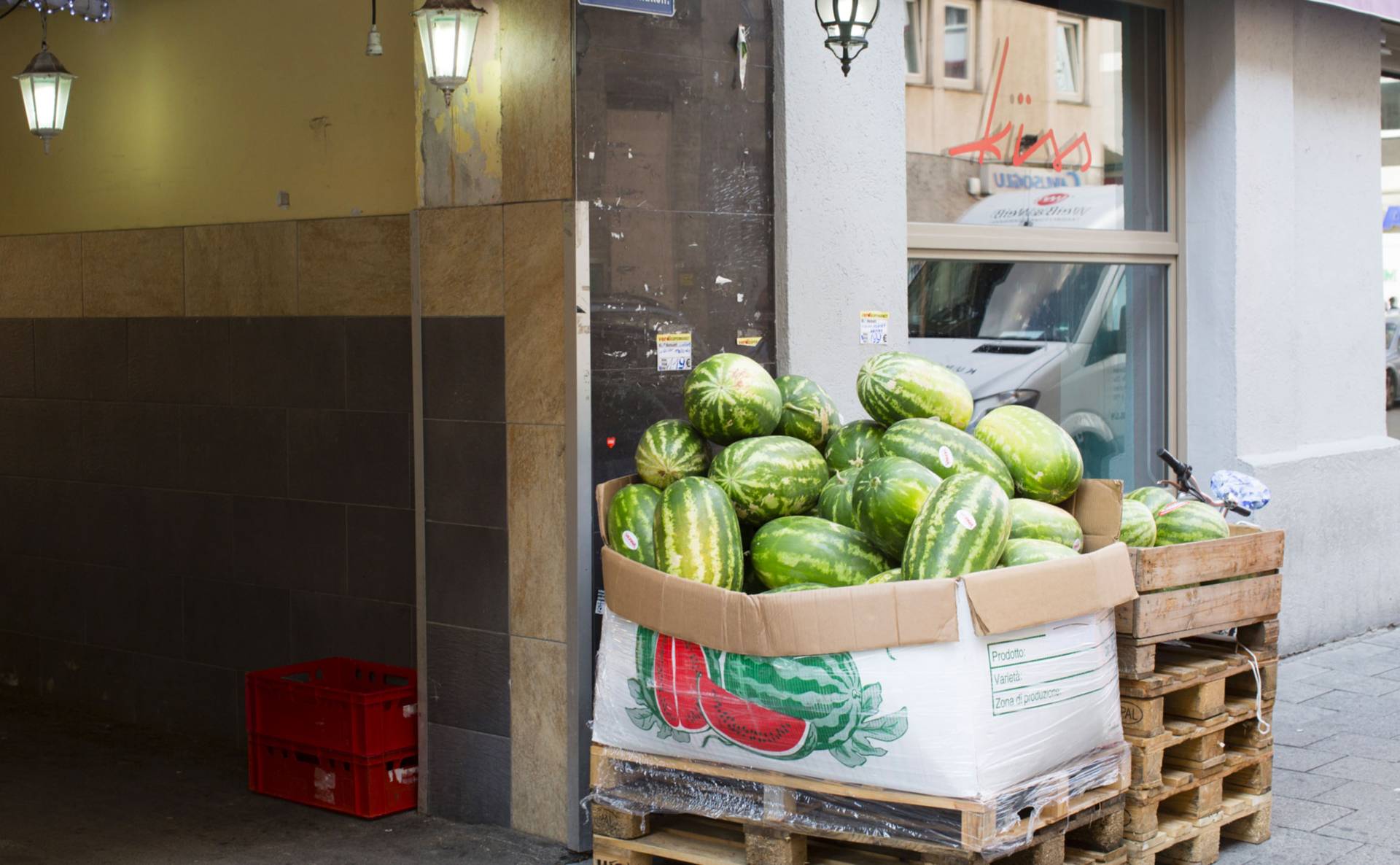
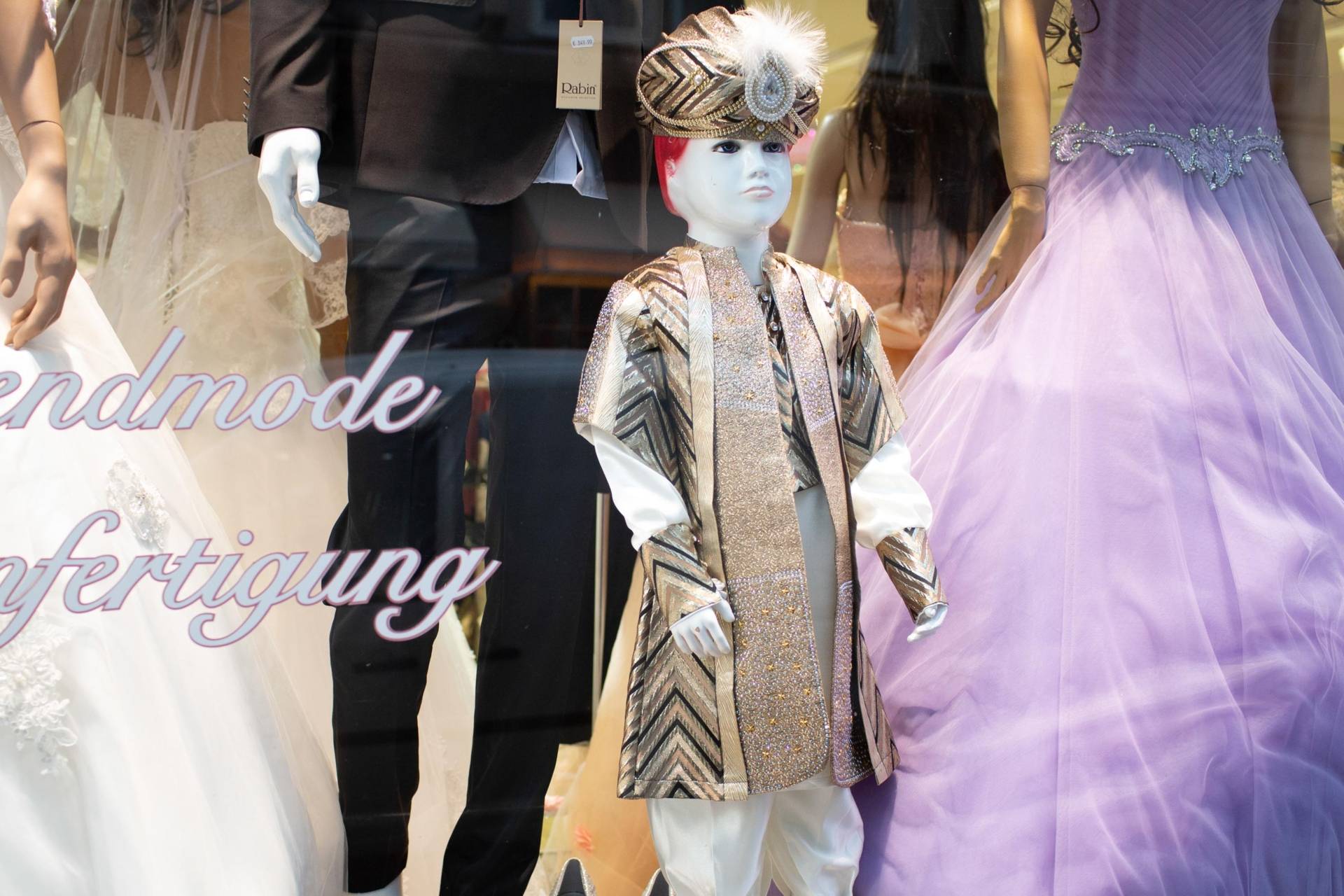
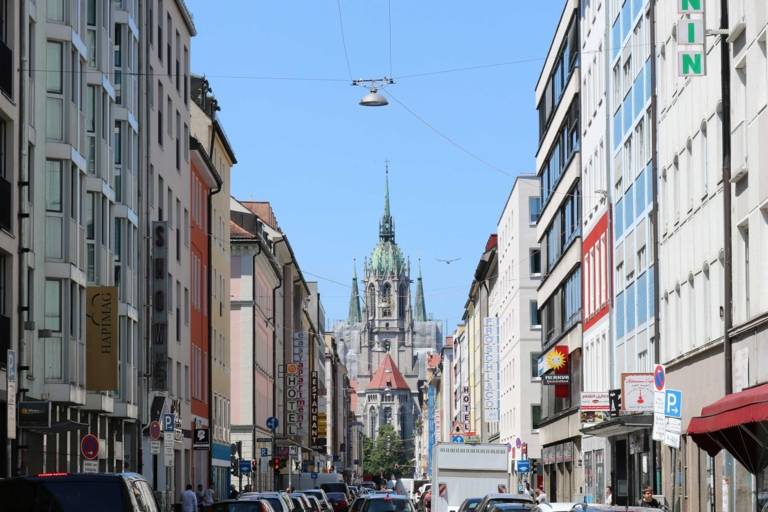
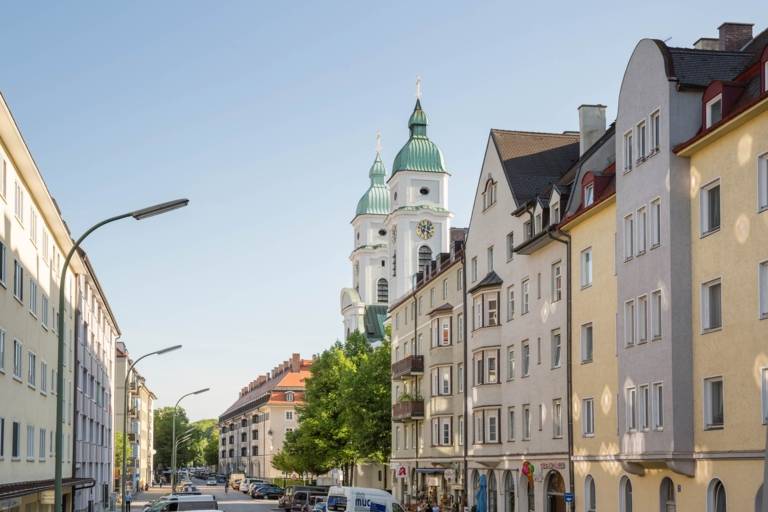
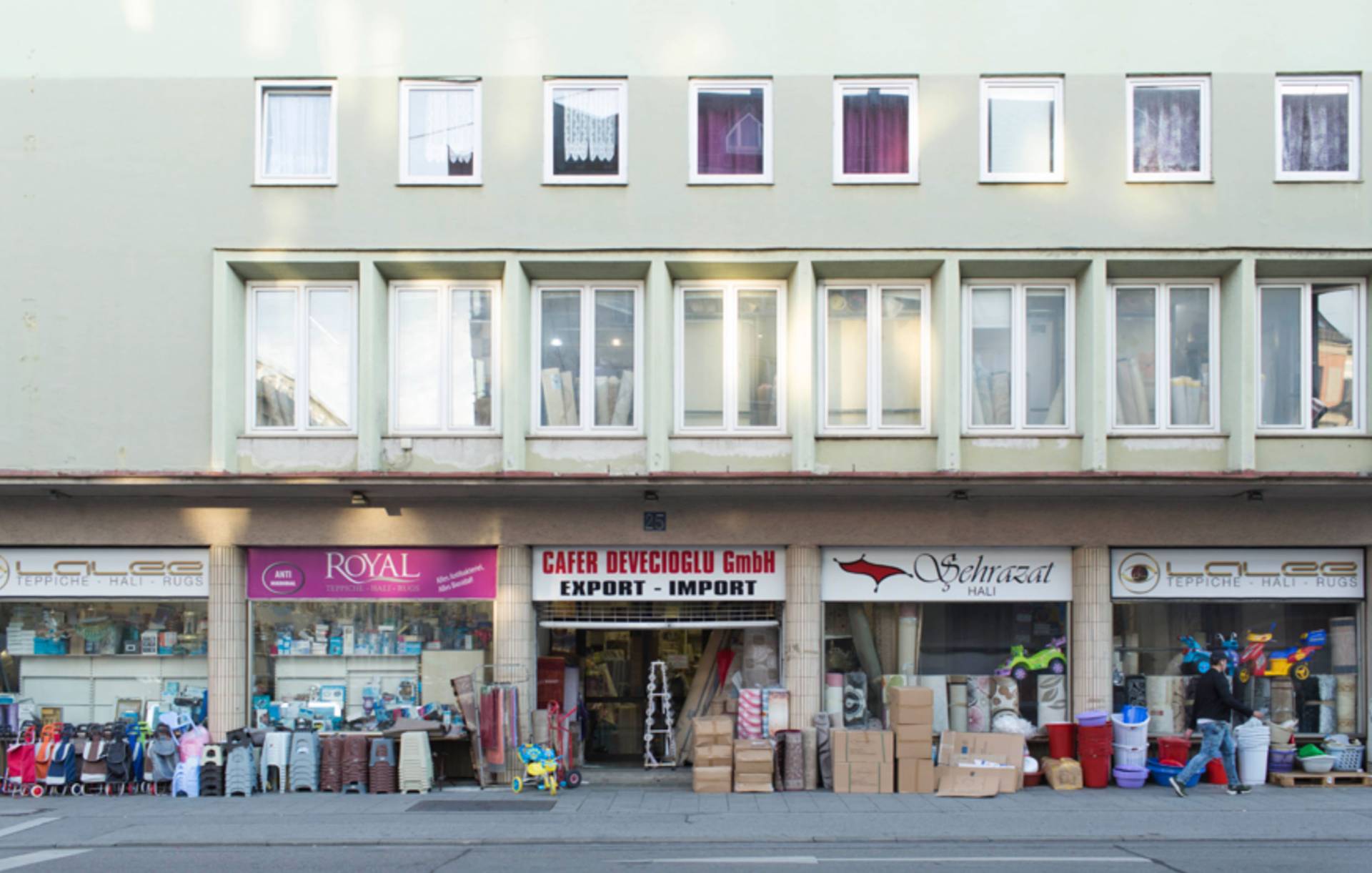
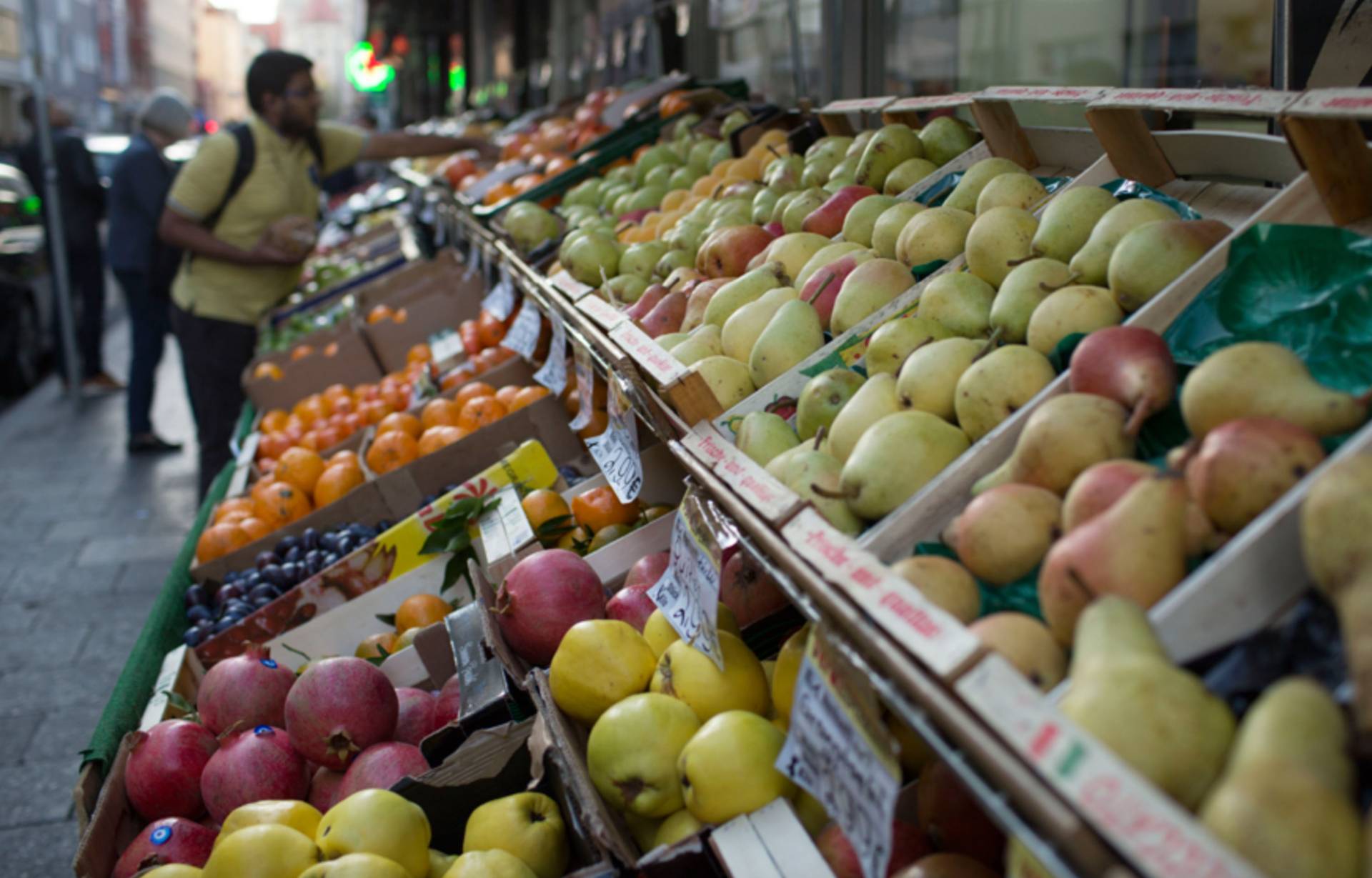
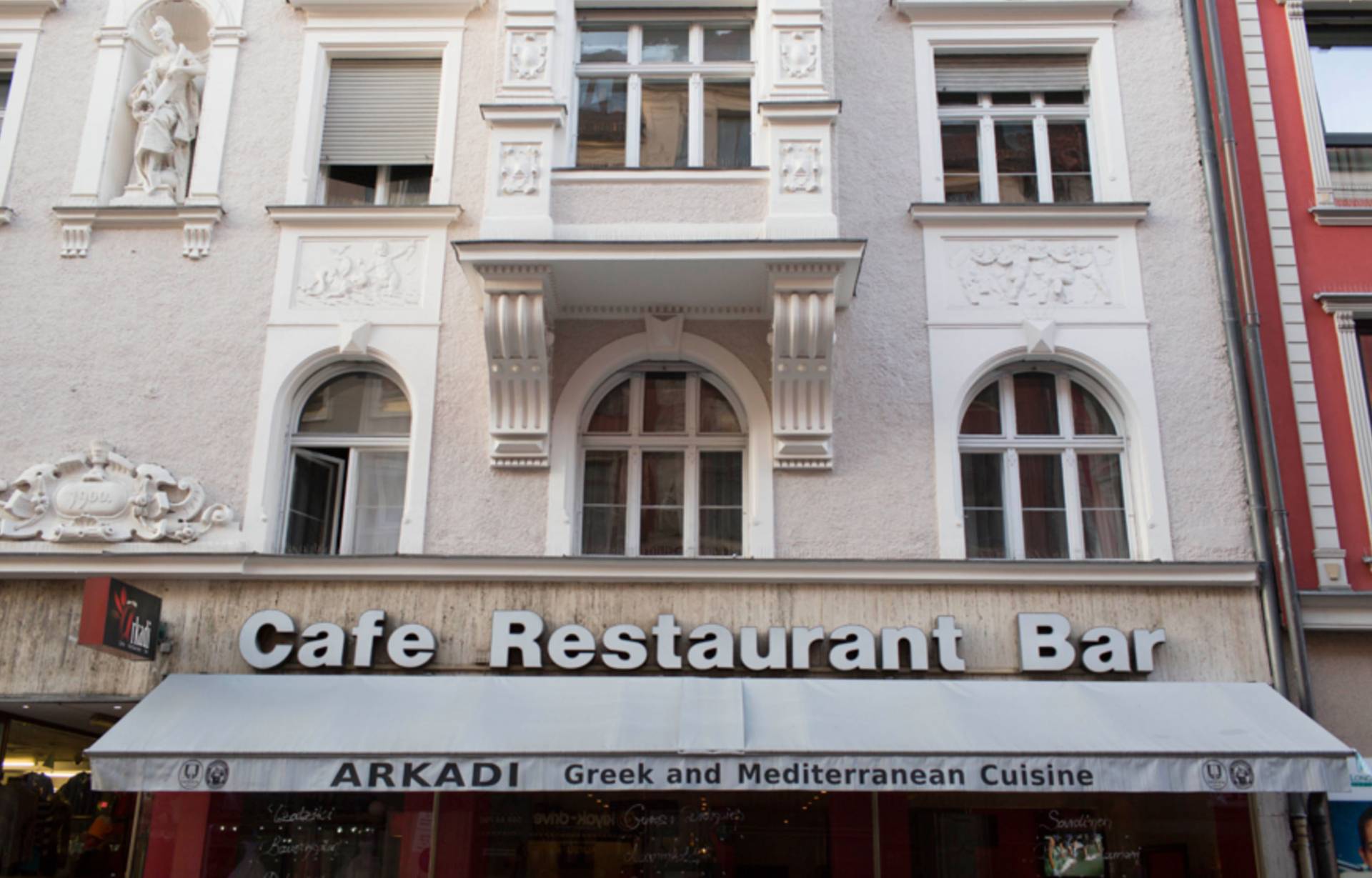
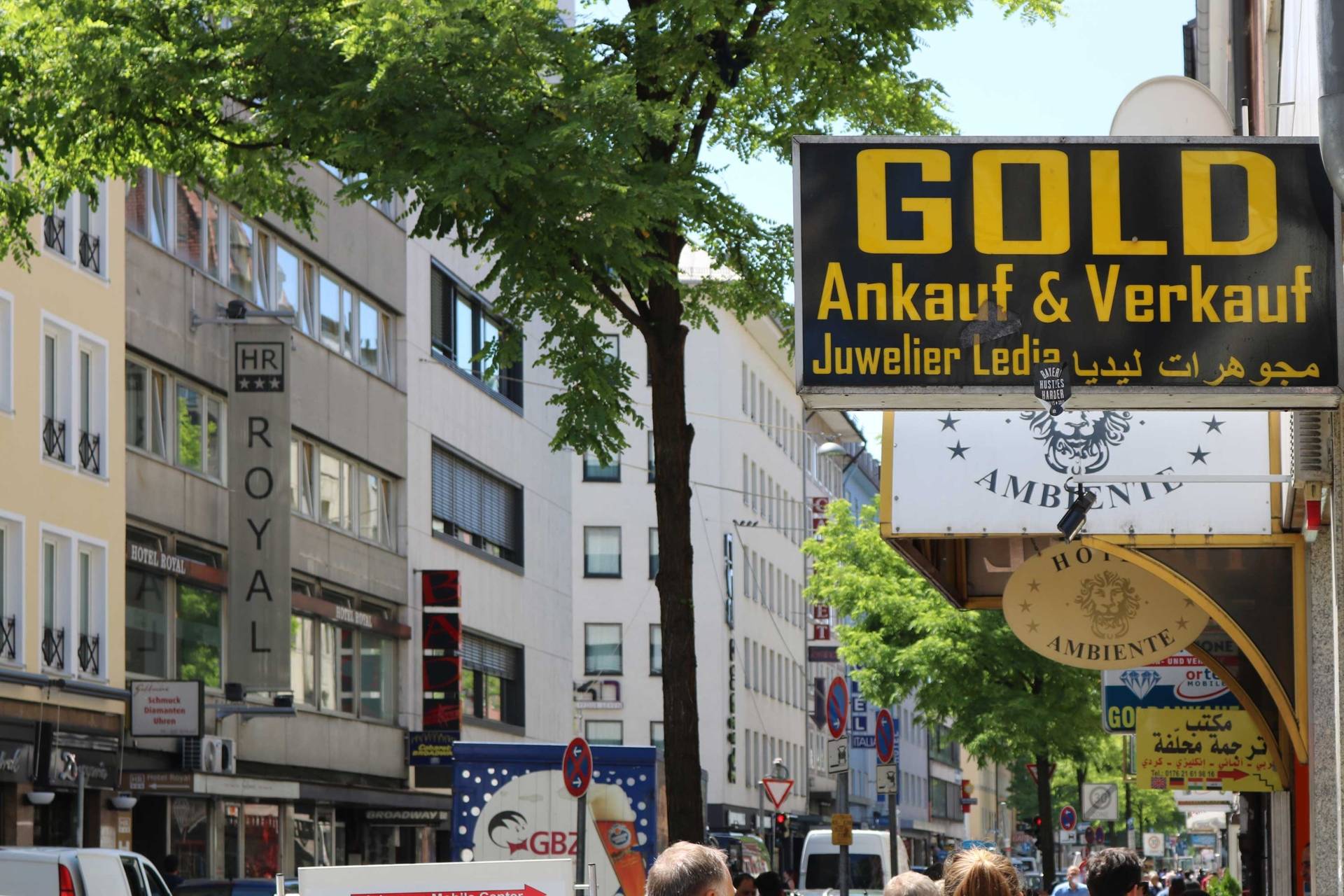
The first thing you'll notice is: wow, it's cramped here. Cars are always double-parked along the roads – Goethestrasse and especially Schillerstrasse – and traffic crawls along at a snail's pace. And the footpaths are no less crowded. But what's most striking about this neighbourhood is how its character is utterly defined by the migrant communities who live here. Turkish supermarkets line the streets, fronted by lavish displays of broad beans, beef tomatoes, aubergines and melons. These are flanked by shops for wedding fashion and halal butchers which sometimes have the odd skinned sheep's head in their windows, giving passing children a scare. Then, in keeping with the mood, there are all manner of Middle Eastern snack bars and restaurants.
The little neighbourhood covers barely more than two streets, and yet it never fails to amaze people visiting Munich for the first time.
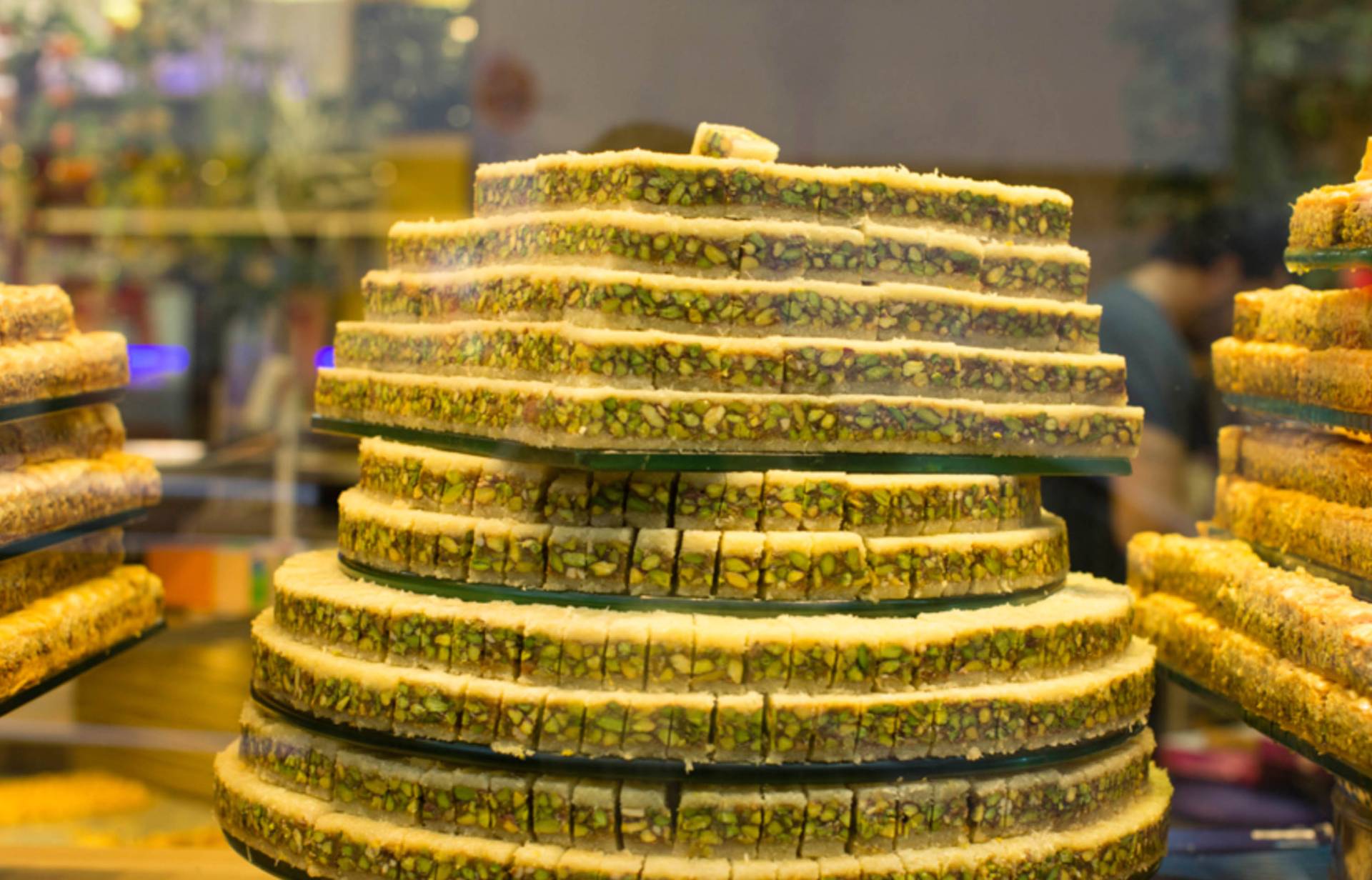
If you've always wanted to sample the differences between Moroccan, Algerian, Syrian, Lebanese, Turkish, Iranian and Uyghur cuisine, this is the place for you. There is one more category of shop that dominates here: electronics and precision mechanics shops. Once upon a time these sold cameras, electrical appliances and stereo systems. In the '90s, they began selling computers and electronics (which spawned Schillerstrasse's cute nickname “Schillicon Valley”), while today it's smartphones and mobile phone contracts with gigantic data volumes.
Grilles over shop windows, including those of the numerous small jeweller's shops, are an indication that some consider the Bahnhofsviertel to be a little dangerous. Generally speaking, nobody needs to be afraid here, there is simply too much going on. However, it is not so cosy that you would want to linger or rest. The streets are narrow, there is hardly any greenery and no benches. The station district is characterised by the brisk hustle and bustle that characterises the station itself.
In Schwanthalerstrasse, the magnificent façade of the Deutsches Theater stands out, which is well over 100 years old and looks back on a history that is as eventful as it is dazzling. With the European premiere of West Side Story in 1961, the theater became the first address for musicals, hosting top international productions from London's West End and New York's Broadway. But cabaret, concerts and shows are also on the program at the theater, which is open all year round. World stars such as David Copperfield and Bonnie Tylor have already enchanted audiences and rocked the stage here.
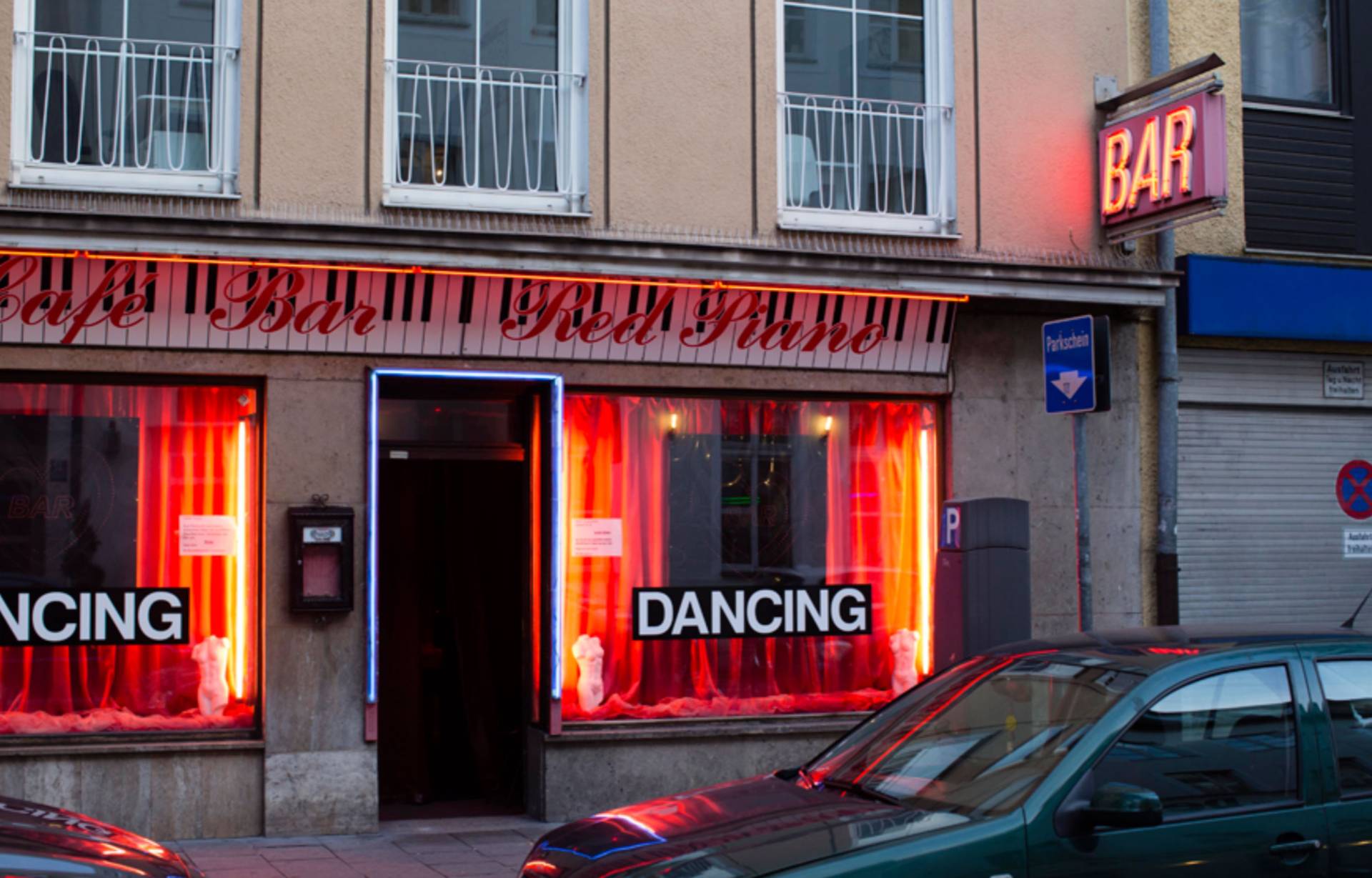
Other streets are dominated by strip clubs and table dance establishments. This place was an entertainment district for American soldiers straight after the war; then as they gradually left the city, and the train station started to be used by growing numbers of business travellers, the former GI bars were transformed into nightclubs and “Animierlokale” (hostess bars). The Bahnhofsviertel district took on a particular character: poky apartments, favourable hotels, beer halls – the place for a “waiting room crowd”, to use a term from a 1977 Bayerischer Rudfunk documentary. It remains the same to this day.
This place was an entertainment district for American soldiers straight after the war; then as they gradually left the city, and the train station started to be used by growing numbers of commuters and business travellers, the former GI bars were transformed into nightclubs and “Animierlokale” (hostess bars).
When so-called guest workers from Italy, Spain, Greece, Yugoslavia and Turkey came to Munich from 1955 onwards, many of them moved to the Bahnhofsviertel, which offered affordable housing at the time. At the beginning of the 1970s, when recruitment ended, the workers brought their families and made Munich – and the station district – their new home permanently. The locals who could afford it had long since moved to the leafy suburbs, but here the housing was cheap and the transport connections good. A migrant-oriented infrastructure developed, with shops, restaurants and spaces for socialising. Until recently, there were numerous mosques in the neighbouring backyards, but these had to close in 2017 for fire safety reasons.
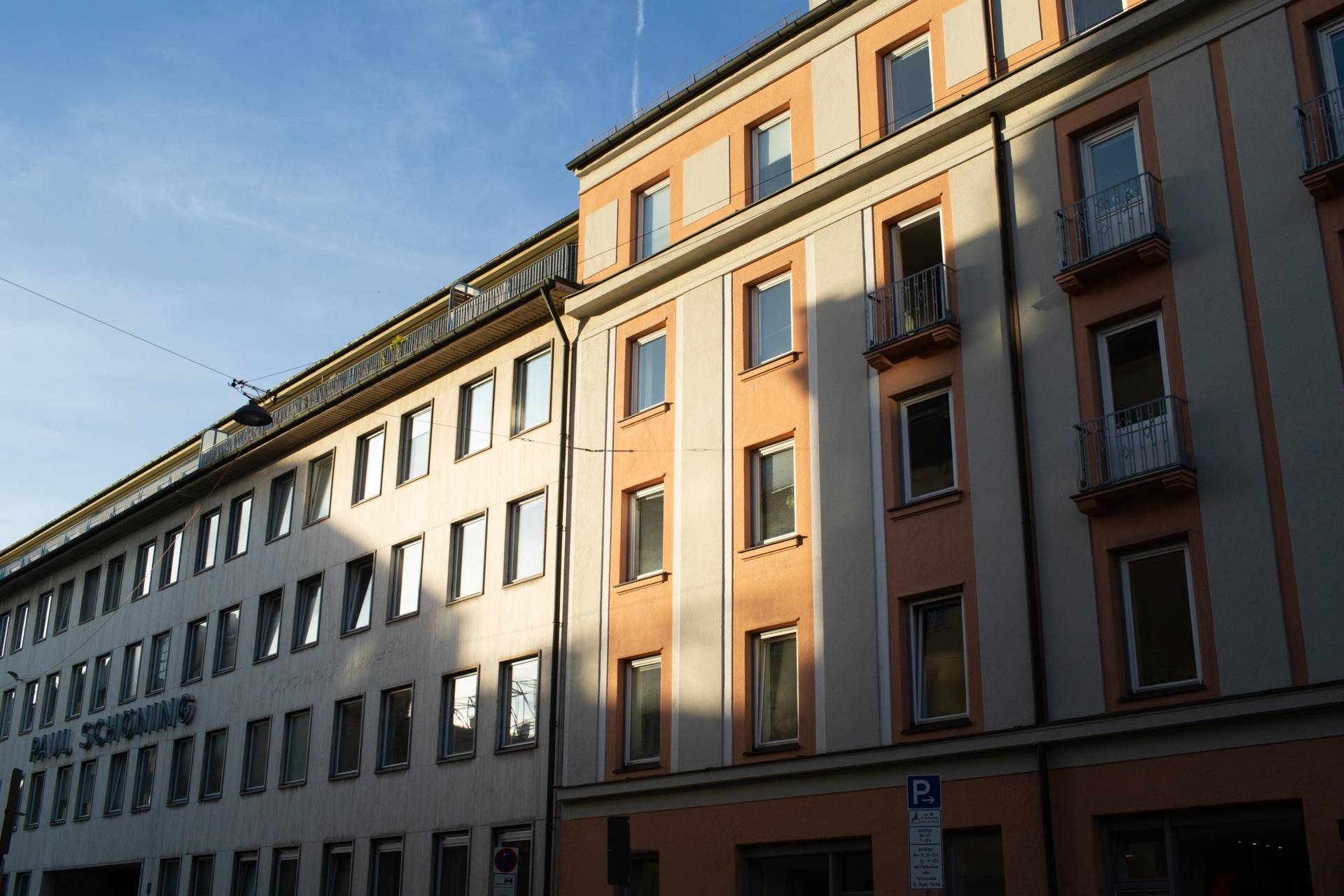
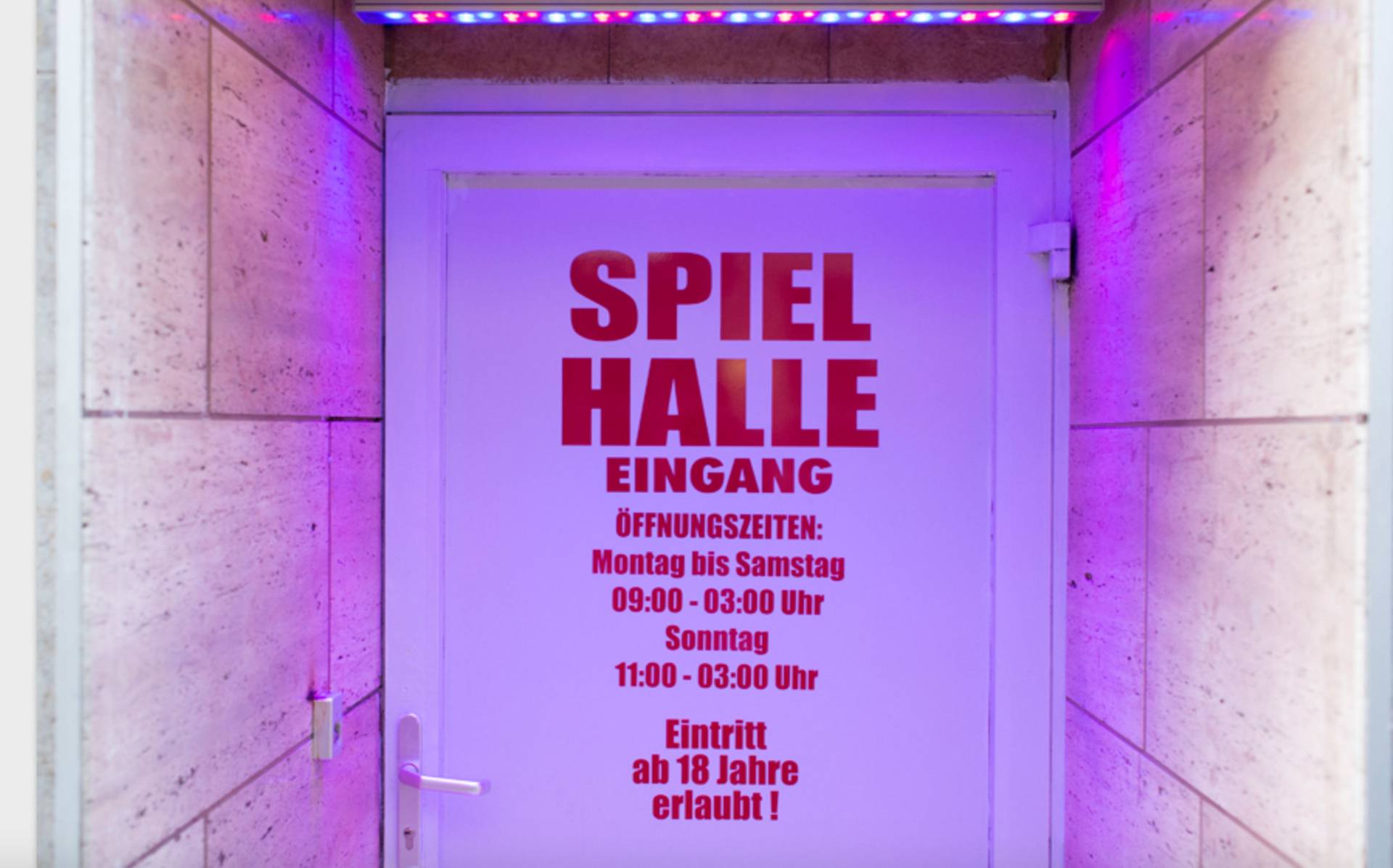
And that is how the Bahnhofsviertel we know today developed layer by layer. In terms of the streetscape here, the 1950s and '60s still dominate, and many facades are clad with slabs of the same porous grey pudding stone which was extensively used in the upgrading of various underground stations around the city. Small businesses in particular are still represented in the neighbourhood today, though betting shops and amusement arcades have been on the rise in recent years. And all the people passing through who know the first thing about property prices wonder: How can this be? Why wasn't this place turbo-gentrified years ago? Low ceiling heights or not, in Munich, everything goes that way in the end.
The reason is probably that the property situation here is rather limited, as the four streets which make up the district are too small for major investors – and gentrification only really takes off when one residential building after another is renovated. Some signs of the times peek through: a pricey restaurant here or a chic graphic design studio with an adjacent showroom there. But these continue to be the exception. The rest remains just as the Bahnhofsviertel has always been: loud and hectic. In short, a delightful boon in the middle of Munich.
One thing is very important in the southern Hauptbahnhofviertel (district): Diversity. The neighbourhood is lively and is characterised by a vibrant diversity that is not only evident on the menus, but also on the taps:
Special: drink beer and eat your own food at Karotte, which is only open on Thursdays
Traditional: taste your way through the beer selection in the Münchner Stubn and savour Italian delicacies
Crafty: drink your way through the varied monthly beers in the cosy Schiller Bräu
Boazig: stop off at the modern and rustic Gasthaus zur Festwiese before or after your Oktoberfest visit
Young: enjoy a cold beer as an aperitif and then savour the fine cuisine at the Marie-Therese Gasthaus
Fine: try Bavarian favorite dishes and toast with craft beer at Irmi